DevOps for CI/CD, Kubernetes and infrastructure as code
Pipelines, clusters and monitoring set up by engineers who also run production around the clock, for teams that want to ship more often without the late nights. We review how you build, test and release today, then automate the slowest and riskiest steps first.
IT infrastructure, cloud migration, monitoring set-up or DevOps?
- IT Infrastructure, Servers & CloudSet up and run servers, networks, storage and cloud: hardware, accounts, backups and cost.
- Cloud MigrationMove existing systems to AWS, Azure or Google Cloud, in waves with a rollback ready.
- Monitoring & Observability Set-upSet up monitoring: metrics, logs, traces, dashboards, alerts and on-call.
- DevOps & Cloud Automation (this page)Release faster and more safely: CI/CD pipelines, Kubernetes and infrastructure as code.
For teams that want to release more often
For product and platform teams that want to release more often without the late nights, whether you are setting up your first pipeline or fixing one that grew by accident. We are based in Gurugram and work with teams across India and abroad, and our engineers also run production systems around the clock.
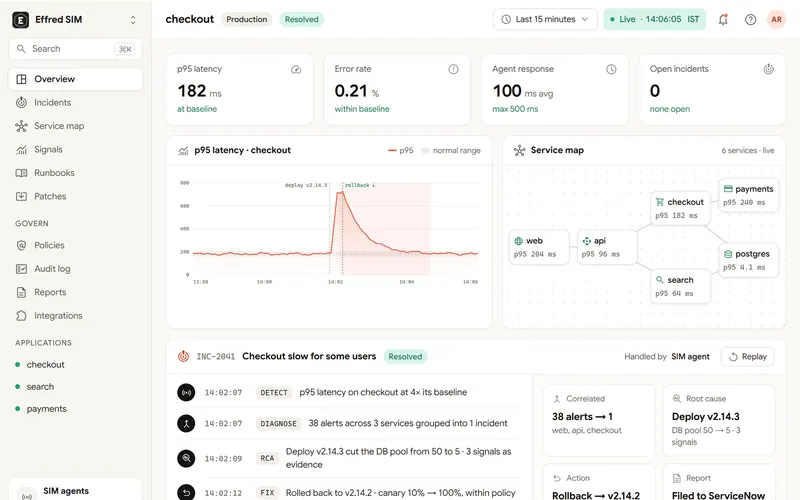
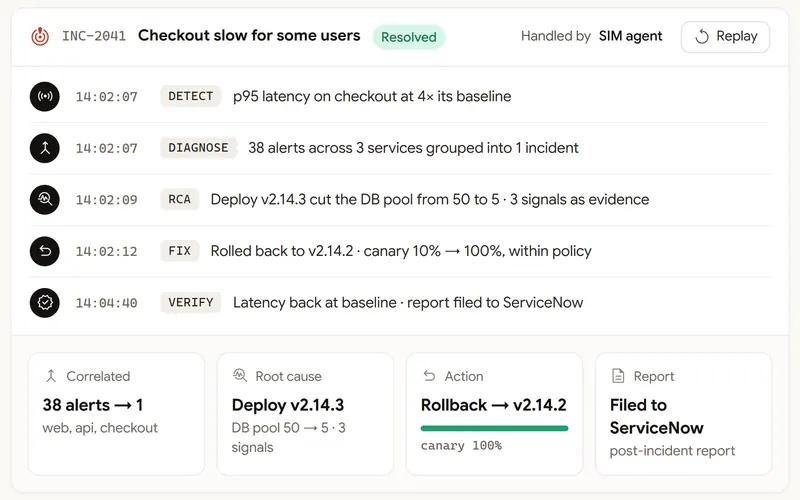
We start with a review of how you build, test and release today, which takes about a week or two. You then get a fixed estimate for the set-up work, and we automate the slowest and riskiest steps first, usually a reliable pipeline and basic alerting. After that we can hand everything over to your team, or run it with you for a monthly fee, with 24×7 support if you want us watching too, and Effred SIM, our AI monitoring product, can put autonomous agents on production as well. Our guide to DevOps for growing companies sets out where to start.
Pipelines, clusters, monitoring and cost
CI/CD pipelines
Build, test and deploy on every merge with GitHub Actions or GitLab CI, and a rollback that takes one step.
Infrastructure as code
Terraform and Ansible for repeatable environments. No more servers nobody can rebuild.
Kubernetes & containers
Helm charts, GitOps with Argo CD, autoscaling and cluster upgrades that do not wake anyone.
Monitoring & observability
Grafana dashboards, Prometheus metrics and alerts that reach the right person with the right context.
SRE & DevSecOps
SLOs, incident runbooks, secrets in Vault and security scans built into the pipeline.
Cloud cost optimisation
Right-sizing, autoscaling and clearing idle resources across AWS, Azure and Google Cloud.
From a review of your releases to a running pipeline
- Week 1–2
Discover
A short paid discovery: goals, constraints, a written plan and estimate.
- Week 2–4
Design
Architecture, UX and a clickable prototype you can react to.
- Sprints
Build
Two-week sprints, with a demo at the end of each one.
- Ongoing
Run
Launch, monitor and hand over, or we keep running it 24×7.
Engineering standards
Stack: AWS, Azure, Google Cloud · Kubernetes, Helm, Argo CD · Terraform, Ansible · GitHub Actions, GitLab CI · Prometheus, Grafana, OpenTelemetry · HashiCorp Vault
- Review first, then a fixed estimateHow you build, test and release, reviewed in about a week or two; then a fixed estimate for the set-up work.
- Pipelines as codeBuild, test and deploy on every merge with GitHub Actions or GitLab CI, with reviewed pull requests and a one-step rollback.
- Infrastructure as codeTerraform and Ansible for repeatable environments; Kubernetes with Helm charts and GitOps through Argo CD.
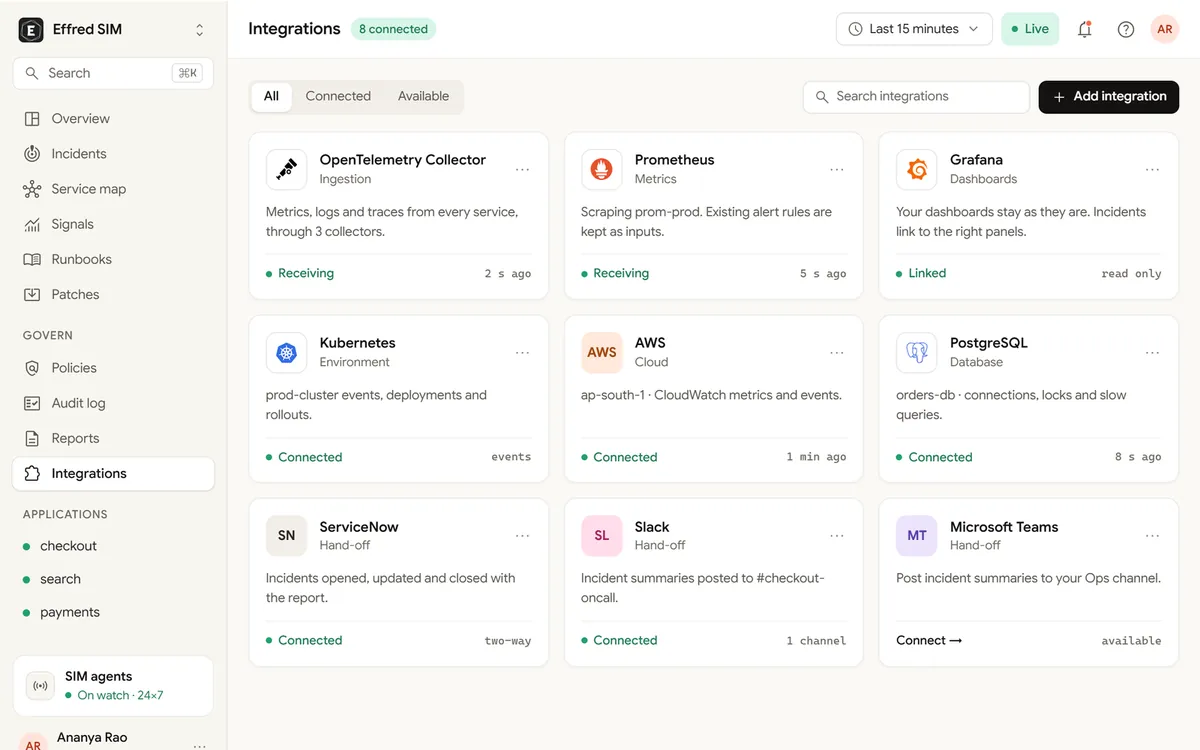
- Observability built inPrometheus metrics, Grafana dashboards and OpenTelemetry-compatible signals, with alerts that reach on-call with context, ready for Effred SIM to act on.
- Security in the pipelineSecrets in Vault, security scans built into the pipeline, SLOs and incident runbooks.
Questions about DevOps
Can AI monitor and fix our production applications?
Yes. Effred SIM, our AI monitoring product, puts autonomous AI agents on your production applications: they monitor, troubleshoot, find the root cause, patch and resolve issues within the policies and change windows you set, with a 100 ms average and 0.5 s maximum response time. Effred SIM: AI monitoring.
What do your DevOps services include?
Whatever is slowing your releases down: CI/CD pipelines, infrastructure as code, Kubernetes, monitoring and alerting, security checks in the pipeline and cloud cost controls. We can set it up and hand over, or run it with you.
How is a DevOps engagement priced?
It depends on the number of applications, environments and clouds. We start with a short review of your pipeline and infrastructure, then give you a fixed estimate for the set-up work and, if you want us to run it, a monthly fee.
How long does it take?
The review takes about a week or two. The first improvements, usually a reliable pipeline and basic alerting, follow in the next sprints; the rest is planned in order of risk and payoff.
Can you set up Grafana and Prometheus monitoring?
Yes — dashboards, data sources, alert rules and on-call routing, plus 24×7 support if you want us watching too.
How is this different from cloud migration?
Cloud migration moves your systems to the cloud. DevOps makes how you build, release and run them faster and safer — before, during or long after a migration.